API-First architecture: How Opigno Enterprise Integrates with Any Enterprise System

Opigno Enterprise is built on an API-first architecture, meaning every feature, data object, and workflow in the platform is accessible and controllable through documented APIs — not just the learning delivery layer. This design philosophy makes Opigno Enterprise fundamentally different from traditional LMS platforms, where integrations are bolt-on connectors rather than core infrastructure.

In practice, API-first means your IT team can connect Opigno Enterprise to any enterprise system — HRIS, CRM, ERP, identity providers, and custom internal tools — with full bidirectional data flow, real-time sync, and automated workflow triggers. It also means the learning layer can be embedded into external applications as a headless LMS, surfacing training content and tracking completions inside your existing digital workplace tools.
What Does API-First Mean for an Enterprise LMS?

An API-first LMS is built from the ground up with the principle that every function is accessible via a documented API before a user interface is built on top of it. In Opigno Enterprise, the API-first foundation delivers three concrete advantages for enterprise deployments:

Composability: Any external system can read from or write to any Opigno data object — user records, learning paths, completion states, certificates — enabling genuinely bidirectional data flows rather than one-way data exports

Future-proof extensibility: As your tech stack evolves, Opigno's APIs allow new integrations to be built without platform upgrades or vendor dependency

AI orchestration readiness: Agentic AI systems can query and act on Opigno data programmatically, enabling the kind of autonomous workflow orchestration that defines a Learning Intelligence Platform

A Future-Oriented Architecture
Multi-tenant Architecture: One Platform, Unlimited Learning Environments

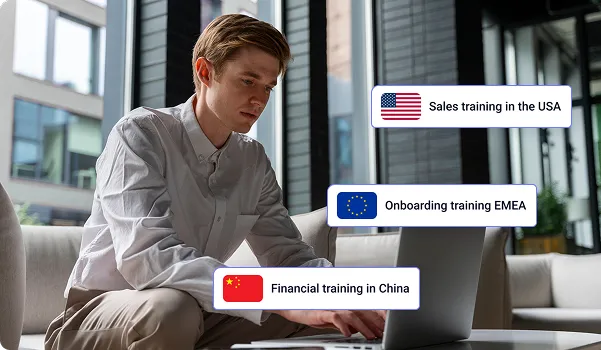
Opigno's API-first design connects multiple learner environments to a centralized hub, giving you full control over content and data.

Each tenant is a fully isolated environment with its own branding, content library, user base, compliance rules, reporting scope, and administrator roles — while sharing the underlying platform infrastructure managed from the central hub. Key capabilities include:

  • Tenant-level data isolation: Each environment operates as a separate data scope
  • Centralized content publishing with tenant-specific delivery: Publish from the master content library and push to selected tenants
  • Per-tenant compliance configuration: Certification requirements, mandatory training rules, and data retention policies are set independently per tenant, supporting multi-jurisdiction compliance
Flexibility for Multi-Tenant Environments
Extensible APIs for Custom Needs

Opigno Enterprise exposes a comprehensive API covering all platform objects and operations. The API is fully documented at docs.opigno.com, allowing IT teams to build, test, and maintain integrations independently.

Extensibility capabilities include custom data fields on platform objects (users, trainings), webhook support for real-time event-driven integrations, and custom reporting endpoints that expose learning data to BI tools.

Extensible APIs for Custom Needs
Seamless integration with your Information Systems

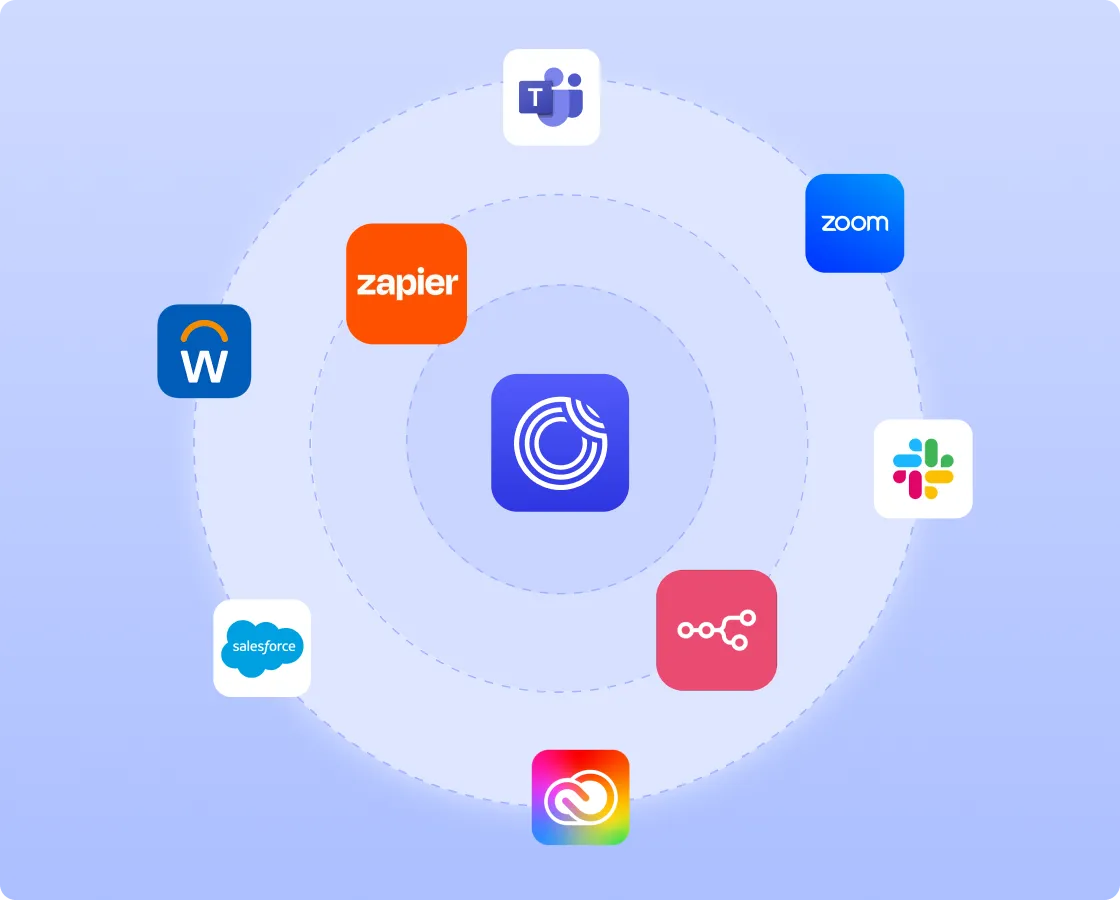
Opigno integrates effortlessly with your existing tech stack—CRM, HRIS, ERP, or custom tools—via APIs. This enables real-time data sync, automated processes, and a smooth learning experience, while reducing manual work and operational silos.

It also integrates with automation platforms like Zapier, enabling no-code workflow automation connecting Opigno to thousands of tools.

Seamless Integration with Your Information Systems
Unified Learning Data Layer: Centralize, Analyze, and Act on Training Intelligence

Opigno Enterprise's API-first architecture creates a unified data layer that aggregates learning activity from all environments — multi-tenant sub-platforms, mobile app, integrated tools, and external content sources — into a single queryable data store. This is the data foundation that enables Opigno's AI analytics and agentic AI capabilities to function across the entire organization.

How it is accessed:

  • Native dashboards: Role-based analytics views for administrators and managers
  • API reporting endpoints: Raw and aggregated data accessible via API for integration with enterprise BI platforms
  • AI analytics layer (Clara): Conversational access to learning data
Data Centralization
Agentic AI via API and MCP: The Technical Layer Behind Autonomous Learning Workflows

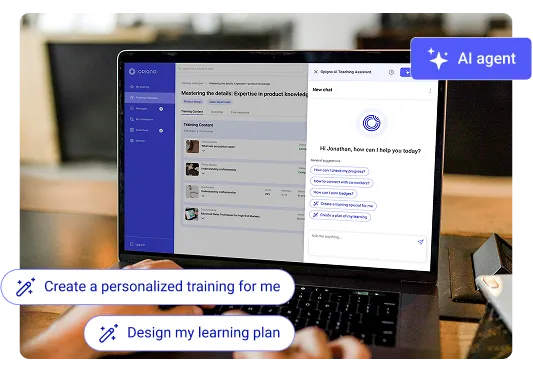
Opigno Enterprise's agentic AI capabilities are built on top of the same API layer available to external integrators, giving AI agents access to the full scope of learner, content, and organizational data.

The Model Context Protocol (MCP) server extends this further by providing a governed gateway through which Opigno's AI agents — and external AI tools — can interact with Opigno's data and with third-party systems simultaneously. This means: 

  • An external AI tool can query Opigno's learner data through the MCP server to make personalization decisions 
  • Opigno's AI agents can access real-time data from connected enterprise systems through the MCP layer
  • Organizations can build their own AI agents that act on Opigno data using the MCP server as the connection point

This architecture makes Opigno Enterprise AI-orchestration ready — able to participate as an active node in a broader enterprise AI ecosystem, not just as a passive data source.

AI Collaboration
Explore more
AI functionalities

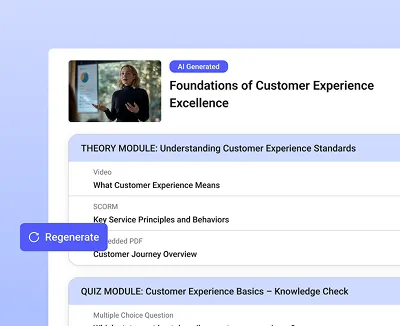
From generating courses in a few clicks to empowering learners and admins with intelligent tools, our platform ensures your training strategy is future-ready.

AI functionalities
Social learning

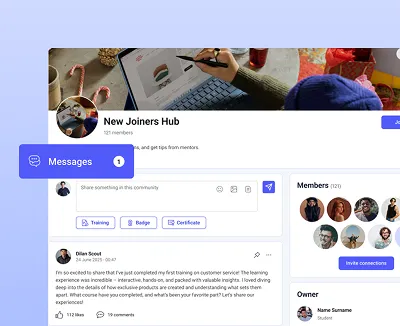
From boosting engagement to fostering communities and ensuring mobile access, our platform creates a learning environment where everyone can succeed together.

Social learning
Security and privacy

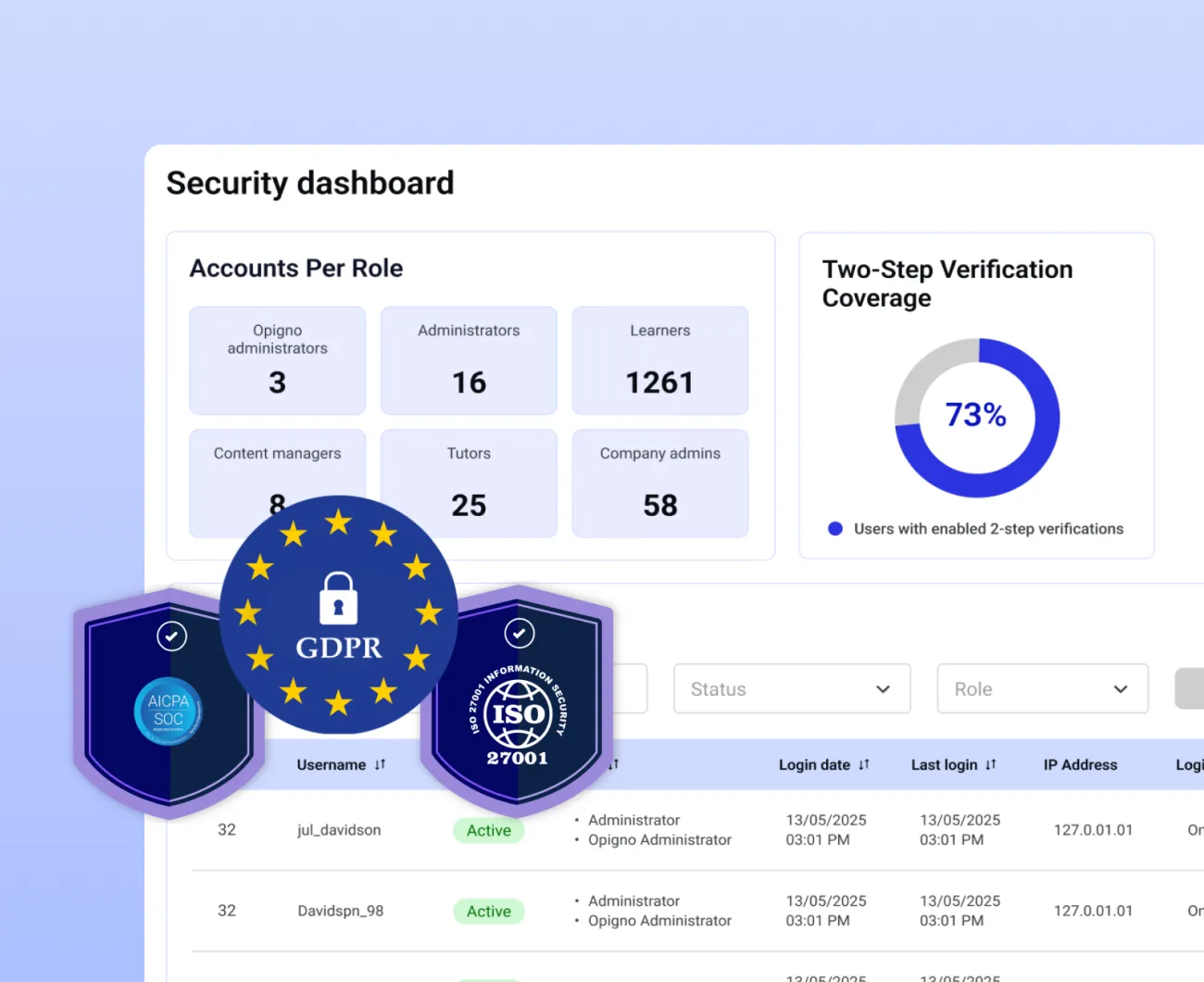
Opigno Enterprise combines privacy-by-design architecture, enterprise-grade compliance, and AI governance to give regulated organizations a secure, audit-ready learning platform they can trust.

Security and privacy
Explore our FAQs

 Find quick answers to commonly asked questions about Opigno Enterprise

What systems and tools can Opigno Enterprise integrate with?
What does "API-first" mean for an LMS, and why does it matter?
Does Opigno Enterprise support headless deployment?
Does Opigno Enterprise support webhooks for real- time event-driven integrations?
How does Opigno Enterprise handle user provisioning and synchronization with HRIS?
Is there a sandbox or developer environment for testing integrations?